BANGKOK — Thailand has formally revived its long-discussed land bridge project, a trillion-baht infrastructure corridor designed to link the Andaman Sea with the Gulf of Thailand and offer container shippers a partial alternative to the increasingly congested Strait of Malacca.
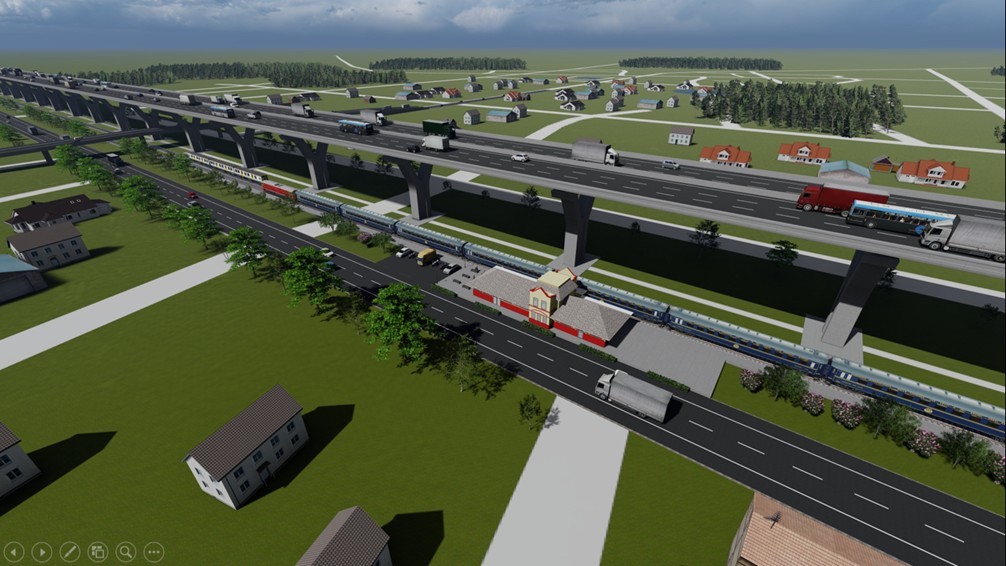
Transport Minister Suriya Jungrungreangkit on Thursday signed off on a revised master plan that would pair new deepwater ports at Ranong and Chumphon with 90 kilometers of elevated rail and motorway across the Kra Isthmus, the slim neck of land that has tempted strategists and engineers for more than a century.
A Century-Old Ambition, Revived
Variations of the project — a canal, a pipeline, a railway — have been proposed and shelved repeatedly since King Rama V first floated the idea in the late 19th century. The current version sidesteps the most contentious option, a canal that would have cut the country physically in two, in favor of intermodal infrastructure that preserves national territory.
Bangkok's roadshow to attract investment has been notably international. Japanese, Korean, Emirati, Chinese and Saudi sovereign vehicles have all received briefings, and the cabinet has authorized concession negotiations to begin in the third quarter.
Competing With Malacca
The Strait of Malacca currently handles roughly a quarter of the world's seaborne trade, and the chokepoint's congestion, piracy risk and physical limits have for years prompted calls for diversification. Thai planners argue that even capturing five to seven percent of east–west container flows would be transformative for the corridor's economics.
Skeptics, including a number of regional shipping executives, are unconvinced. Transshipping containers between two oceans — unloading them on one coast, moving them across by rail, and reloading them on the other — adds handling cost and operational risk that may overwhelm the modest time savings. Singapore, the great beneficiary of the Malacca route, is watching closely but appears unconcerned.
“The economics of intermodal transshipment are unforgiving. The land bridge will succeed only if it becomes part of a broader regional manufacturing story, not just a shortcut.”
Economic Benefits and Risks
The Thai government estimates the project will create approximately 280,000 construction jobs at peak, generate $5 to $7 billion in annual gross value added once operational, and catalyze ancillary industrial development — petrochemicals, electronics assembly, food processing — along the corridor.
Independent analysts are more cautious. The Asian Development Bank, in a confidential review summarized to investors, projects that the corridor's internal rate of return falls between 5.8 and 7.4 percent under base-case assumptions, comparable to other major regional infrastructure projects but well below the headline figures circulated by promoters.
Environmental Concerns
The southern provinces through which the corridor would run — Ranong, Chumphon and Surat Thani — encompass mangrove ecosystems, fishing villages and protected marine areas that environmental groups warn could be irreparably damaged. The revised master plan includes a 1,400-page environmental impact assessment that critics say still understates dredging-related sedimentation risks and the cumulative effects of new port traffic.
Local fishing cooperatives have organized to demand stronger livelihood guarantees, including direct equity stakes in the port operating companies.
Regional Trade Implications
If executed, the land bridge would reshape regional trade flows in ways that go beyond shipping. Vietnam and Cambodia could see their own corridor projects accelerate. Malaysia, which has its own east-coast rail link under construction, would face new competition. India, increasingly active in the eastern Indian Ocean, has signaled interest in tying its planned Great Nicobar transshipment port into the same intermodal network.
Geostrategic motivations are visible just below the surface. Reducing dependence on Malacca has been a stated objective of Chinese maritime strategy for years, and the land bridge would partially address what Beijing has long called its "Malacca dilemma" — though it is far from clear that Thailand wishes to be seen as solving a problem on Beijing's behalf.
Timeline
- Q3 2026Concession negotiations begin with shortlisted consortia.
- Mid 2027Final environmental impact assessment approval expected.
- Late 2027Construction of southern port at Ranong begins.
- 2030First berths operational on the Andaman side.
- 2034Full corridor including rail link projected to open.
A Test of Thailand's Ambition
The land bridge is, in many ways, a project that has more to prove than to deliver. Thailand's economy has spent the past decade growing more slowly than its Southeast Asian peers, and the country's leaders see the corridor as a generational opportunity to reposition the kingdom at the center of regional trade rather than at its margins.
Whether the project ultimately becomes the most consequential piece of infrastructure in twenty-first-century Southeast Asia — or another century-old idea that fails to clear the political and economic hurdles in its path — will be tested over the next four years.