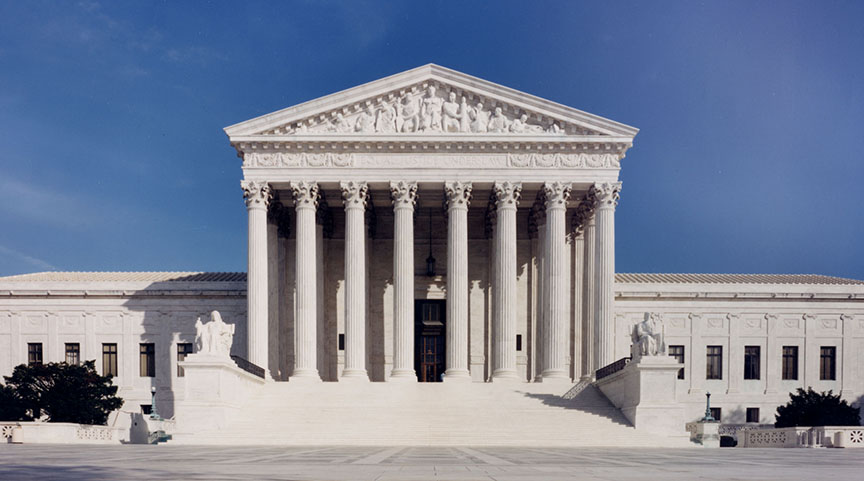
WASHINGTON — A divided Supreme Court on Thursday narrowed the reach of one of the most frequently charged provisions of federal firearms law, holding that the categorical prohibition on gun possession by users of controlled substances cannot be applied to every defendant covered by its text.
The 6–3 decision in United States v. Carrington reshapes a 56-year-old statute that has anchored thousands of federal prosecutions each year, and is expected to send a wave of post-conviction petitions through the lower courts.
What the Court Decided
Writing for the majority, Justice Amy Coney Barrett held that the statute, codified at 18 U.S.C. § 922(g)(3), is constitutional on its face but cannot be applied to defendants whose drug use is not shown to render them, in the court's words, "presently dangerous in a manner consistent with the historical tradition of disarming the irresponsible."
The decision builds on the framework the court established in New York State Rifle & Pistol Association v. Bruen and refined in United States v. Rahimi, requiring modern firearm restrictions to be justified by analogues drawn from the historical record at the time of the founding and Reconstruction.
Legal Background
Section 922(g)(3) was enacted as part of the Gun Control Act of 1968 and bars firearm possession by anyone who is "an unlawful user of or addicted to any controlled substance." Federal prosecutors charge the offense thousands of times each year, often in cases where a defendant is arrested on a separate drug or gun charge and the § 922(g)(3) count is added based on contemporaneous marijuana use.
Constitutional Analysis
The majority's opinion draws extensively on historical surety statutes, which required individuals deemed dangerous to post a bond as a condition of carrying weapons. Barrett wrote that such laws "disarmed by individualized assessment, not by categorical exclusion of an entire class of citizens."
Justice Sonia Sotomayor's dissent, joined by Justices Elena Kagan and Ketanji Brown Jackson, accused the majority of substituting "historical pattern-matching for considered judgment about public safety," and warned that the decision would generate years of confusion in the lower courts.
“The decision narrows the statute without striking it down. The harder questions — about marijuana users in legalization states, about opioid use disorder, about chronic versus acute risk — now move to the district courts.”
Reactions From Advocacy Groups
Second Amendment groups hailed the decision as long-overdue clarification. The National Rifle Association called it "a vindication of the principle that the right to bear arms cannot be erased by a categorical label." Gun Owners of America said it would press for additional challenges to other categorical disqualifications under federal law.
Gun-violence prevention groups condemned the ruling. Everytown for Gun Safety said it "opens a doorway between two of the most lethal combinations in American life — substance use and firearm access" and would create "intolerable evidentiary burdens" for prosecutors.
Drug-policy reform organizations, by contrast, welcomed the decision as a recognition that the federal government's continued classification of marijuana as a Schedule I controlled substance has put millions of otherwise law-abiding adults in legal jeopardy in states where the drug is legal under state law.
Policy Implications
The decision's most immediate consequences will play out in the 24 states and the District of Columbia that have legalized adult marijuana use, where defendants charged under § 922(g)(3) will now demand individualized findings of present dangerousness.
The U.S. Sentencing Commission and the Department of Justice are expected to issue interim guidance within 30 days. The DEA's long-delayed proposed rescheduling of marijuana from Schedule I to Schedule III, currently before the agency, may also take on new urgency.
Future Legal Challenges
Constitutional scholars predict the next wave of litigation will focus on adjacent categorical disqualifications — including the prohibitions on possession by undocumented immigrants, by those subject to certain civil protective orders, and by individuals previously committed to mental institutions.
Several circuits are already entertaining challenges to those provisions, and Thursday's decision is likely to be cited in nearly all of them. "The court has handed lower judges a new map," said Adam Winkler of UCLA School of Law, "but the territory it covers is enormous."
A Statute Under Strain
For all the rhetorical heat surrounding the decision, the practical effect of the ruling is narrower than either side suggests. Section 922(g)(3) remains on the books. Federal prosecutors retain considerable discretion. And for defendants whose drug use is genuinely linked to dangerous conduct, the statute still applies in full.
But the categorical certainty that defined federal firearms law for two generations is gone. From here forward, every charge will require a story.